


InterviewーPeople who work with SunFlare
Translation—A career that offers freedom and learning
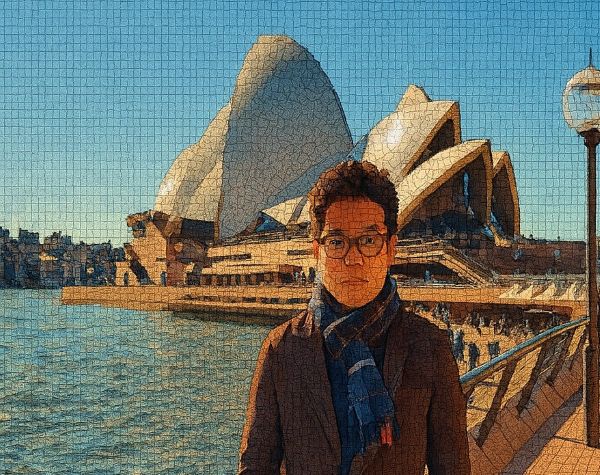
TT
After working in Japan, including work as an in-house translator at an IT company, TT returned to Vietnam. He began translating and interpreting as a side job, and now works as a freelancer. Among the Vietnamese translators registered with SunFlare, he is known for consistently delivering high-quality work. In this interview, we asked him about his background and experience, as well as his current work style and future aspirations.
Getting started in the translation industry
My first step into translation came at an IT company, where I served as a bridge between the Japanese and Vietnamese development teams, translating internal documents and day-to-day communications. From 2006 to 2009, I worked in IT in Japan, where I was also responsible for in-house translation. After returning to Vietnam in 2010, I started out as an interpreter through a referral. The same company later asked me if I’d like to try translation, too, which led me to start pursuing translation more seriously as a freelancer. In the beginning, it was a side job—I worked my main job during the day and translated in the evenings.
— TT delivers very high-quality translations, and he has learned his craft largely on his own.
I started as an in-house translator, so I built up my skills through on-the-job training—communicating with coordinators and receiving feedback from reviewers to complete my translation work. To this day, I keep up with the daily news in both Japanese and Vietnamese and watch Japanese films to keep my feel for the language sharp. In these ways, I continue gathering information and maintaining my linguistic foundation. I also make sure to visit Japan a couple of times a year to soak up the local atmosphere and pick up new words and trends.
Discovering SunFlare
In February 2011, I passed a translation trial with SunFlare. I first passed the test for Japanese-to-Vietnamese translation, and a few years later, I told SunFlare I wanted to try the other direction (Vietnamese-to-Japanese) as well. Fortunately, I was able to pass with a high score.
— When TT first registered, he didn’t have enough work to freelance full-time. As he gained experience and his translation income increased, he decided to go independent.
Since registering with SunFlare, I’ve been consistently receiving work from the company. Over time, it seems I earned the trust of the project managers, and I was gradually assigned larger projects. Through a wide variety of translation work, I was able to develop both my expertise and the quality of my work.
Current work
Currently, about 80% of my work is translation and about 20% is interpreting. Since the COVID-19 pandemic, interpreting opportunities have decreased, so my focus has gradually shifted toward translation.
— In addition to translation, TT also works as an interpreter.
On days when I have an interpreting assignment, I take plenty of time to prepare, including reading through reference materials. Sometimes, after an interpreting assignment, I move on to translating, which can keep me working until one or two in the morning. On the other hand, when work is slow, I use the time to absorb new ideas through the news and movies, traveling, or spending time with friends—which really makes me appreciate the freedom and flexibility that come with being a freelancer.
— His exceptional translation skills are evident in his ability to independently handle a wide range of fields and large volumes of translation work.
I translate across a wide range of subjects, including content published in print such as service plans and in-store flyers for major telecommunications companies, as well as various manuals. I’ve been handling such public-facing content for many years. For one major medical project, I translated a physicians’ textbook of several hundred pages entirely on my own. I also handle a wide variety of documents closely tied to everyday life, such as documents for nutritional supplements and automotive kit manuals.
— In addition to translation and interpreting, since 2010 he has also been reviewing and checking free Japanese-language publications for Japanese residents in Vietnam.
Here, my job is not to check the linguistic accuracy, but to make sure the article doesn’t violate Vietnamese laws, business customs, public order and morals, cultural norms, or common sense. I also have to verify the accuracy of the information. Because this work directly affects whether the publication is approved, it’s a critical task that demands reliability and impartiality.
— He has a clear routine for maintaining his language skills.
I keep up my language skills through extensive reading and listening to the news, learning expressions from Japanese movies, and visiting Japan several times a year to refresh my sense of the language. I feel that these small, consistent efforts directly support my listening and speaking abilities for interpreting, and my reading comprehension and writing speed for translation.
The best things about translation work
The first thing that comes to mind is how translation helps me maintain and improve my language skills. Living outside Japan, my exposure to Japanese can easily dwindle, but by constantly honing my listening and speaking skills through interpreting and my reading and writing skills through translation, I’m able to keep refining both my Japanese and Vietnamese at a professional level. Another great thing is that I can naturally build up expertise over time by working across different fields.
— As a freelancer, he can design his life at his own pace while keeping his distance from the complexities of corporate organizations.
Another thing I like about my job is the flexibility. With so much flexibility in my schedule, self-discipline is essential, but having that autonomy motivates me to keep growing. In addition to translation and interpreting work, I’ve also been taking on speaking engagements and teaching Japanese-Vietnamese interpreting classes.
— He spoke enthusiastically about the joy of seeing his translation in actual stores.
Another rewarding aspect is the joy of seeing my work take shape and reach the public. The thrill of seeing documents I translated being displayed in stores as flyers or manuals is something special, no matter how many times I experience it. Similarly, when I completed the project for the medical book of several hundred pages, it gave me greater confidence as a professional and became a valuable foundation for my future work.
— He is actively expanding the scope of his career, balancing translation, lecturing, and other related activities.
My work ethic has also changed. The practice of doing two or three rigorous self-checks before delivering my work has carried over into careful attention to detail in everyday life, helping me cultivate a personal sense of diligence. Beyond translation and interpreting, combining my work with other activities—such as teaching and speaking—helps me maintain not only my income, but also my connections with people. That, I really feel, is the beauty of freelancing.
— In the age of generative AI, he still sees real value in human translation.
I feel that the emergence of AI has reaffirmed the importance of the ‘human eye.’ For example, in an email addressed to a university instructor, AI mistranslated ‘Teacher’ as ‘Doctor.’ For situations that involve pragmatics and contextual judgment, it is critical to involve human professionals to make the final call.
— Translation also has a positive impact on his life.
Translation is work that builds my knowledge, gives me greater flexibility in time and place, and polishes even the finer details of my character. Committing to the basics—such as building my vocabulary through the news, picking up expressions from movies, and making sure to check my translation two or three times—leads to high-quality work.
Future dreams
With the spread of AI, demand for translating simple content such as emails has dwindled, but I want to keep taking on large projects that require deep comprehension and a high level of responsibility. Four years ago, I wrote a book on Japanese ‘omotenashi (hospitality)’ culture in Vietnamese. The book sold out and went into a second printing. I’d also like to focus on sharing my interpreting and translation experience with younger generations through lectures and classes. In my downtime, I enjoy traveling. So far, I’ve been to about 20 countries, and I plan to visit many more.

[Editor’s note]
His sincere engagement with language, commitment to continuous learning, and persistent efforts and self-discipline in daily life are what underpin his flexible work style and the high quality of his work. Our interview with TT offered us many valuable insights.
Effective communication creates value.
Put your skills to work at SunFlare.
